Feed Me

Last post I showed you a few Sheaffer Snorkels with flexible nibs. While I was doing that I took a closer look at them and found a few interesting tidbits which in my pen filled brain were fascinating. If you are as occupied with esoterica as I am you might find it interesting too, but first a little story:

I’ve repaired and built a number of Snorkels usually with good results. However, one I made (the original Frankensnork) wound up with a bit of a problem: ink starvation. That pen had a flexible stub nib and while all seemed well enough I soon was made aware that sometimes (while being exercised by its owner who is well known for the ability stretch pens to their limits) the line being drawn would peter out. Not enough ink flowing to the point during grueling calligraphic maneuvers was the root cause. Of course I felt rather inept at not noticing this when I tested the pen originally and felt I must have overlooked something. My contrition is legendary and all I could do was swear at myself a lot and wonder.

So why did a perfectly fine, to all appearances, Snorkel so act? That old question was on my mind as I disassembled and examined my newest flex Snork.  Imagine my surprise to find that Sheaffers with the flexible nibs had differently constructed feeds! Imagine my surprise that I was too thick to have noticed this before!

In case you don’t know about feeds they are what supply ink from the reservoir to the writing point. The basic function of this piece, usually made out of hard rubber, is to allow ink to flow to the business end via a channel and also contain excess fluid in a ridged part called a comb. This link goes to a good in-depth explanation of how this all works. A delicate balance is maintained by a feed so it can supply enough ink for writing while allow air to pass the opposite way to replace what is drained. If either one of these is slacking in its work you get that starvation I mentioned.

It seems that Sheaffer combated this in the high flow flexible nib Snorkels by creating a super feed that could really move the ink. This brings us to a quick sketch of the complex inner mechanism of a Snorkel, I’m afraid. Hold on through this boring part and you get to see the pretty pictures (well, if you like boring pen bits they are pretty). A Snorkel has a tube that can be extended outwards from under the nib when the knob at the other end of the pen is twisted. An extensive advertising campaign explained this action to be a wonderful boon to mankind in that the pen did not have to be dunked into the ink for filling but only the end of the tube. Yep, no wiping off of the nib when you need to top up the writing fluid. Not quite the same importance as polio vaccine but this was the 50s when automotive tail fins were considered a triumph. I’m not going to go to much farther into how this all works (but here’s a good link to that here) except to say that not only is the ribbed feed under the nib part of the ink delivery unit but so is the tube. Thus, the tube has a thin strip of hard rubber that acts like a feed extension which passes the ink baton to the external one. So, specifically what did Sheaffer do to increase ink flow? Simple, they made the pipes bigger. By that I mean the spots ink flow through were increased in size (quite a bit) so the nib would keep spitting out ink even if the user was ham handed and flexed the heck out of every character they wrote. Let’s take a look in pictures, shall we? Don’t forget to click on them to see them large.
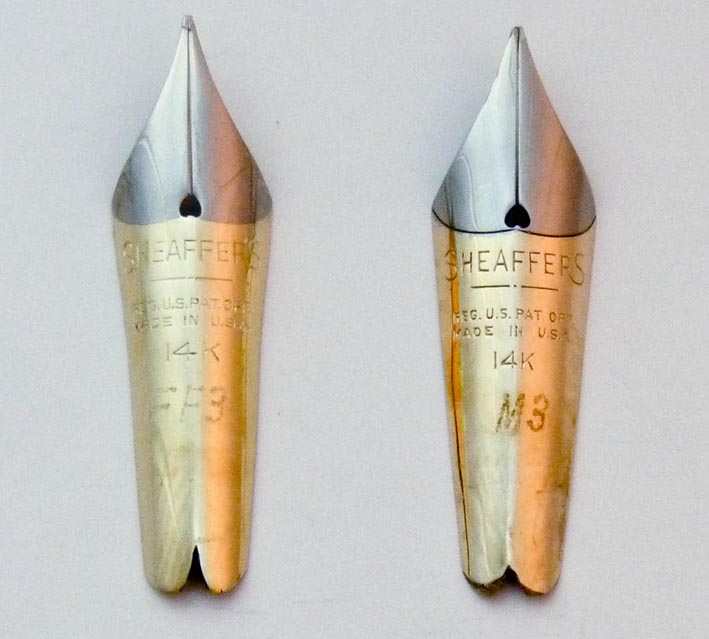
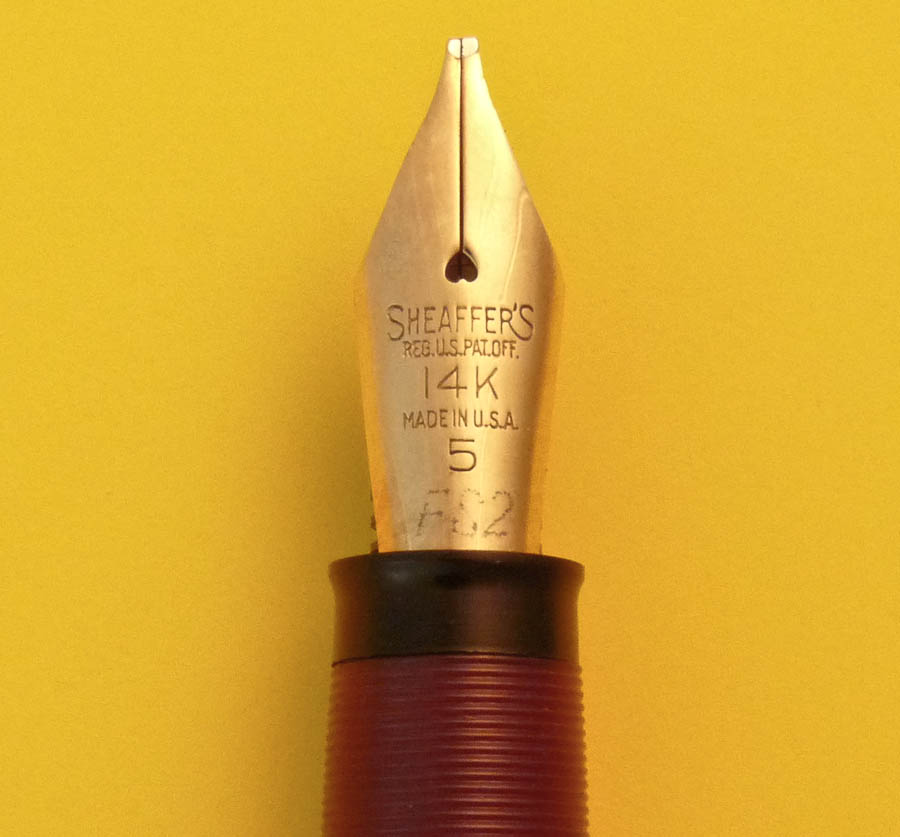
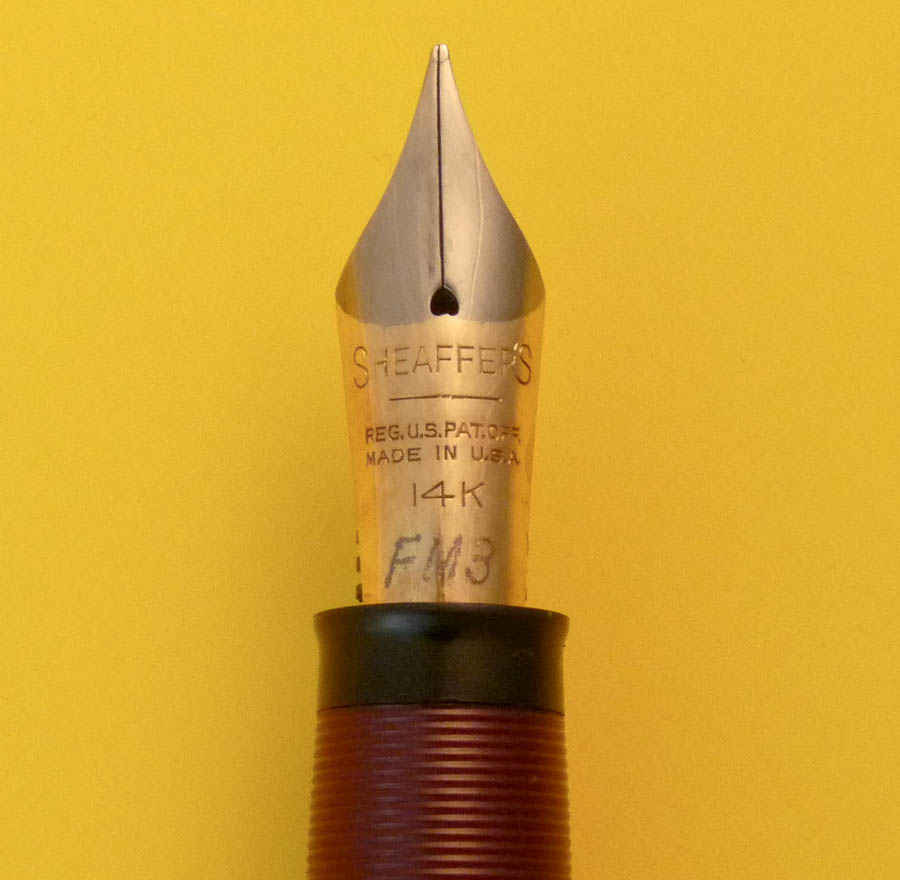
First is a comparison of a flex and non-flex open, two-tone style #3 nib. You’ll see that they look similar enough but upon close inspection the flex nib (with the code FF3 on it) doesn’t have the impressed line that mark the boundary between the silver and the gold sections as the less acrobatic firm medium one. Since the flex nib is thinner (and possibly metallurgically different) I’d wager removal of this embossing was to prevent a weak area that could snap or crack in use. It could have acted like paper when scored to form a crease to ease folding. A bent or broken nib is not something you’d be very happy about while writing a letter. The platinum mask (a thin plating, really) on the flexible nib is applied to mimic the one with the grooves in it. I always like to think there was a back room at the Sheaffer nib works were a few folks labored over these not widely produced nibs with loving care. Yes, overly romantic indeed.

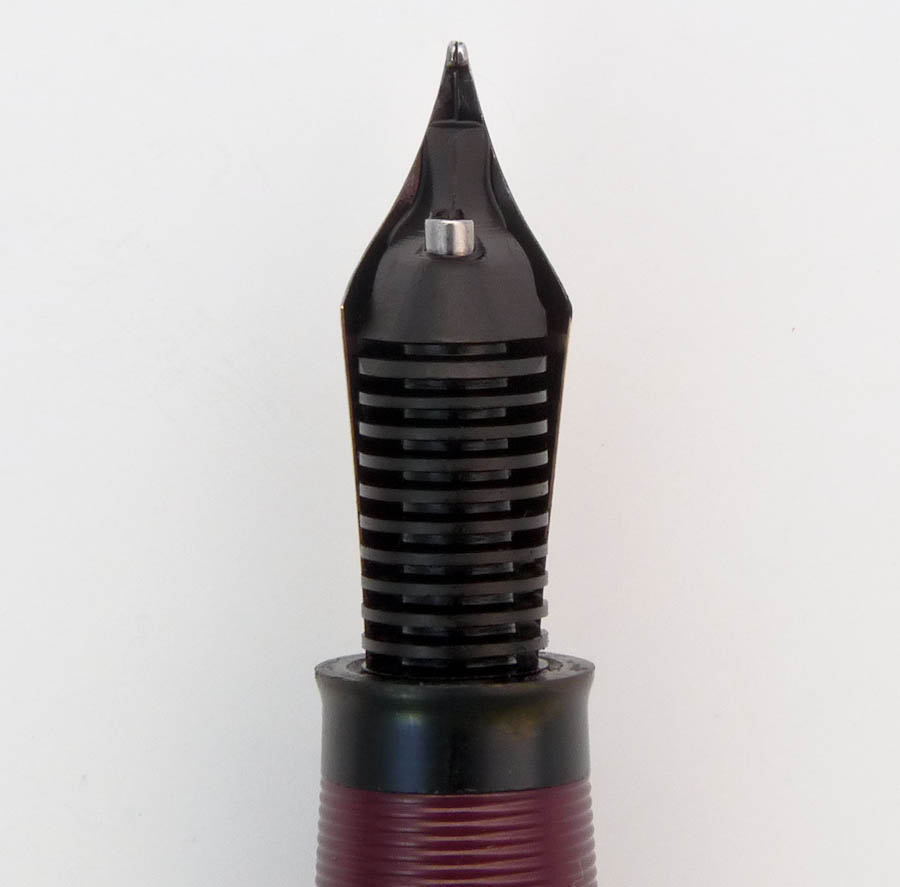
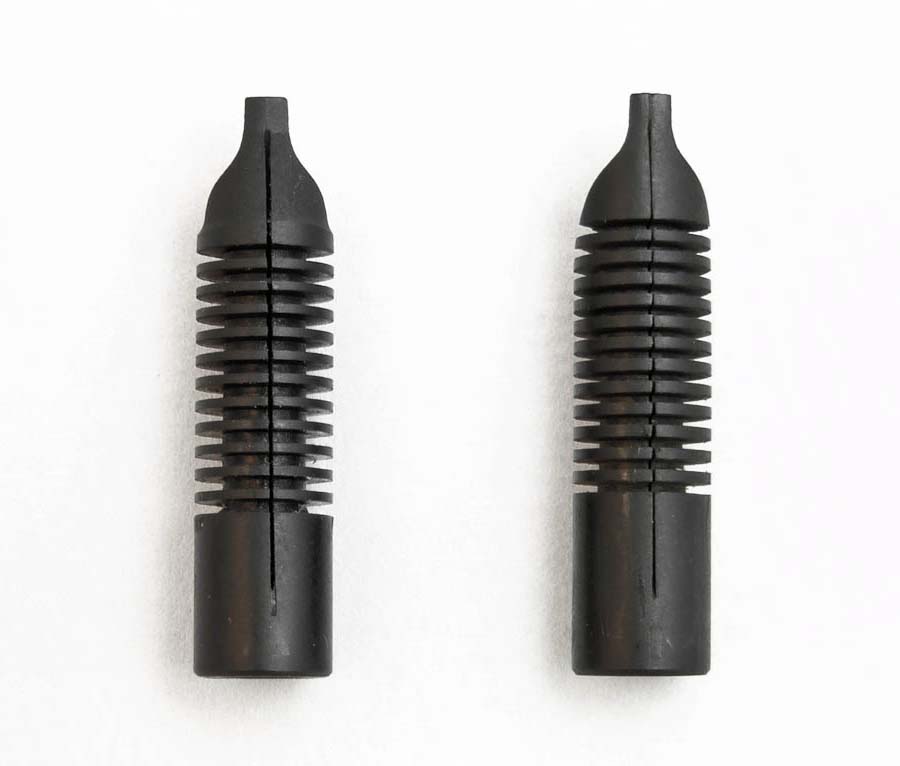
Next let’s look at the feeds that live down below. The picture is of the top of them which comes into contact with the underside of the nibs. You’ll see the one that services our flexible friends has a wider groove down the middle. This is an ink supply channel and larger means more flow. Also, the combs are more widely spaced possibly to retain the expected greater ink overflow.

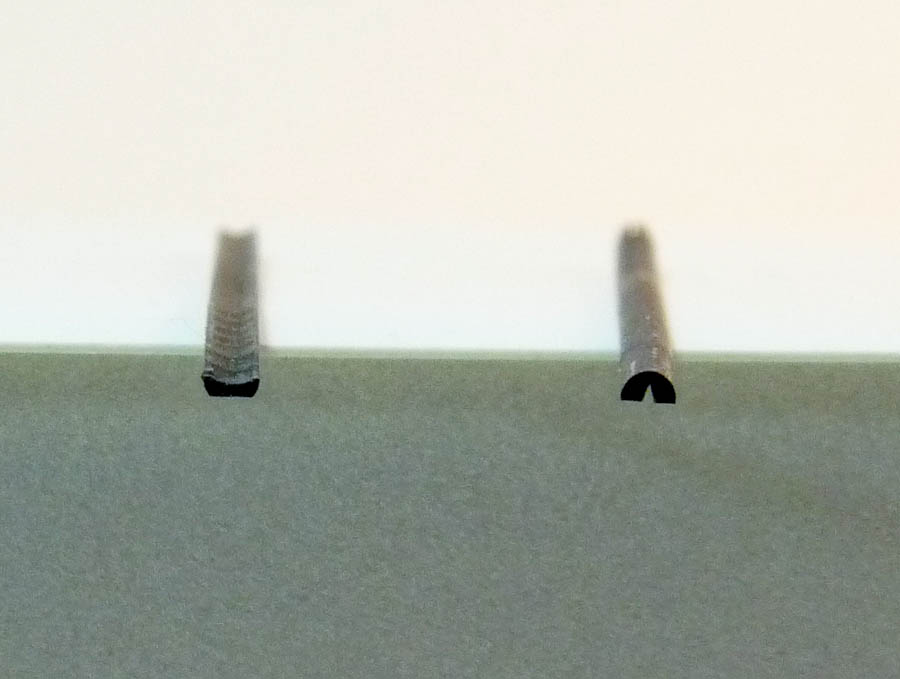
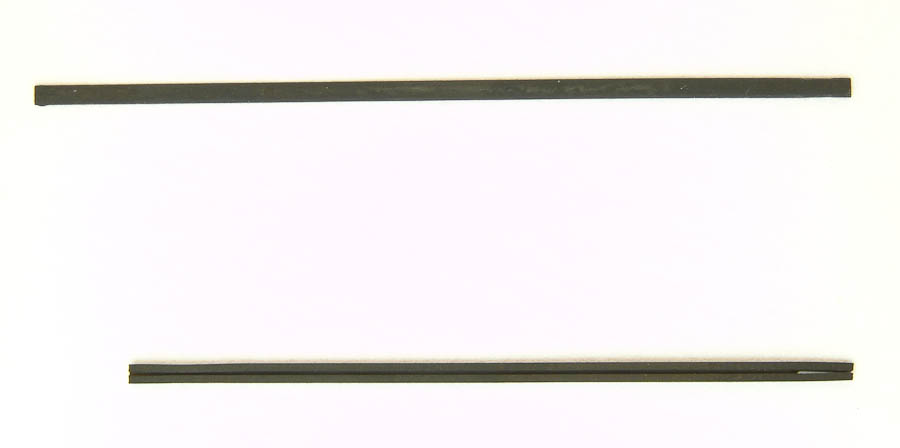
The last bit in the ink supply chain is the thin hard rubber strip that lives in the tube. The image shows them from end on and the difference is most striking. Look and see how the one out of the flex pen is much more slender allowing it take up far less space so more ink can bustle on through. The bottom of it (facing up in the picture) is actually concave and the top a flat and ungrooved. Remember that capillary action helps to draw the ink forward which is why the tube isn’t just empty, but here we see how almost empty Sheaffer could make one.

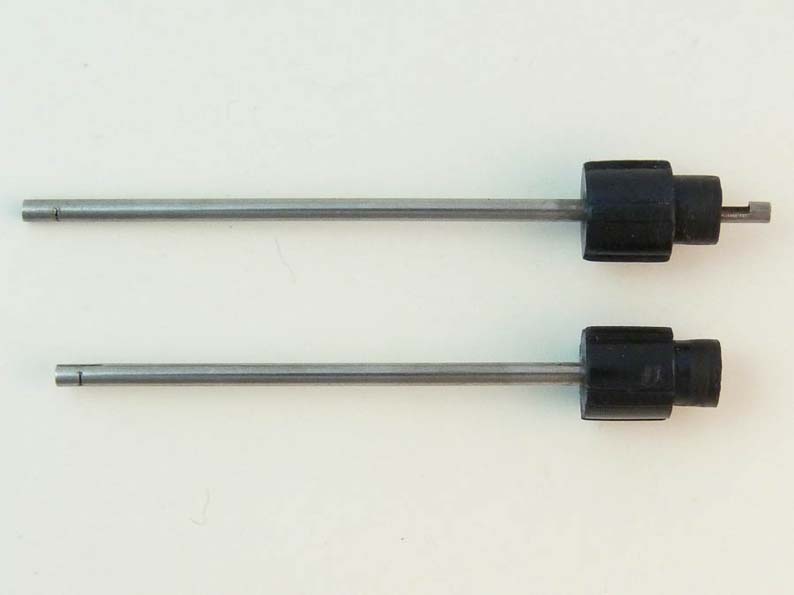
In the next two illustrations we see the Snorkel tubes themselves and a top view of the strips from them. I don’t know why the one for the fancy flexible nib is longer but it is. When in the pen it extends from out under the comb feed a tiny bit more than normal. I’ve got a stub flex Snorkel with a #2 style nib (single tone gold) which has the same type of strip in the tube but is the same length as a normal pen. Thus, the length is a mystery to which I can see no obvious explanation. On the other end near the black plug you can see how the tube is also longer there and has a cut out in. I’m not sure about this either but it could be for obtaining ink more rapidly through greater contact.
And so ends our tour of this unique type of pen. I’m no expert and some of my assumptions may be wrong but I hope you found this interesting nonetheless. I say “Vive la Difference!” if it keeps my snorkel happily making weird, varying lines.
Soggy Pasta Primervera

If you’re active in using or collecting fountain pens eventually you will hear the term “flexible”. It’s often used with reverence as when someone gushes “the pen has a nib that is flexible!!” Sometimes you hear such called “wet noodles” which causes no end of confusion as people not familiar with the term try to figure out how long to boil their pen to get it al dente. I’m pretty sure that most people who read this (all 6 or you) will know what a flexible nib is and what it does but that isn’t going to stop me from rambling on and giving a explanation on a kindergarten level. If you are schooled in flex about you might want to skip to the pictures.

Once upon a time skilled individuals created fancy documents with flowing, beautiful script. If you look at historic letters you can see that the lines which make up the letterforms flow in varying widths. For example, a line descending into a curve would become broader in a natural swelling that reminds one of a widening river. The same line usually pinches back to being narrow yet again while it moves along into another letter. One could think of it a bit like brush strokes in painting where more pressure creates a greater ink patch on the paper. However, we are talking about pens and not bristly things.

Mechanically the way it was accomplished is very easy to understand (even for me). Writing tips from the quill to our modern gold nibs have a slit down the middle to the point which directs the ink through capillary action to where you want it on the paper. The narrowest line a nib can make is the width of the point without any (well, hardly any) downward pressure on it.  If you bear down while writing the two sides of the slit, called tines, spread apart creating a wider contact area on the paper. The more pressure means the wider the gap, and thus a wider line. Eventually if the spread is too far apart there would be a loss of capillary action or ink flow which stops the line on the paper which is bad. That’s how it works, Q.E.D.!

So, why is flex so special then? Well, fountain pens today are less able to create line variation. This is because the nibs are thicker and stiffer so the tines don’t move apart much. There’s metallurgy involved as well but I’m not getting into that since its complex and I’m too stupid to fully comprehend it. Let’s just say chances are a modern pen will usually write a predictable line without much variation akin to ballpoints.

As stated this is a change from the past. Early on just about all fountain pens (like their dip pen predecessors) had nibs that would allow for a great deal of flexibility. The systems used to teach cursive or business writing took this into consideration and instructed on when and where to apply pressure to create the standardized but artistic writing styles. Still, for writing in small print for things like accounting there was a need for uniform, thin lines and less flexible points were available. With the advent of things like flimsies and carbon copies stiff nibbed pens become the norm since a firm, regular contact point on the substrate was necessary. To top it all off an inflexible nib is easier and requires less practice to use correctly.

This transformation started in the 30s and by the 50s the vast majority of pens had fine or medium nibs often described as being like nails since their strength would allow them to be driven into wood with no damage. At this time flexible nibs were for specialty uses and not very common.

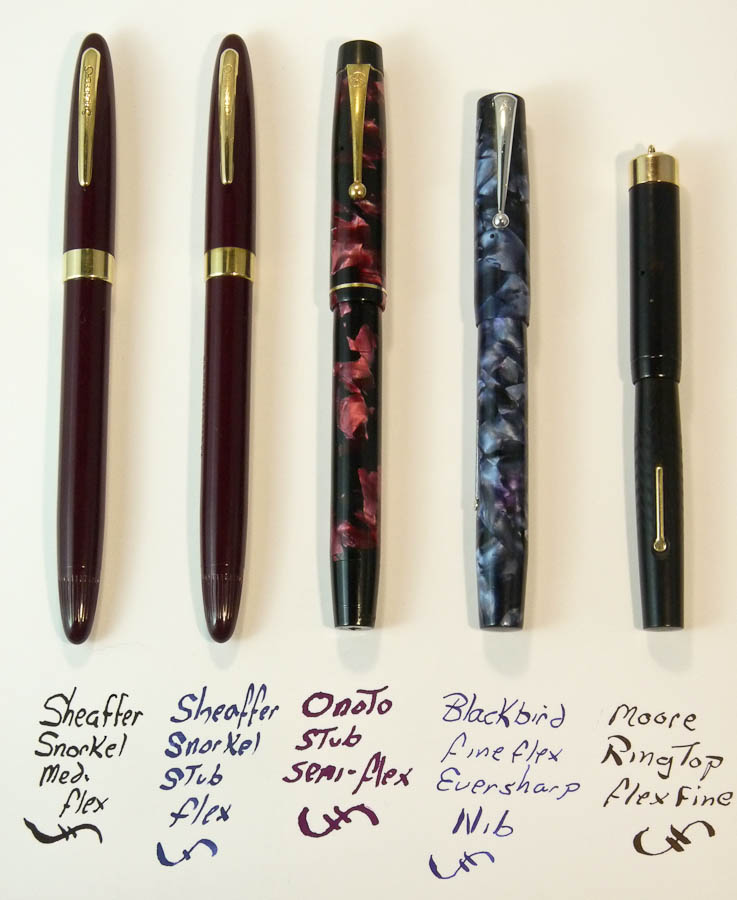
So, now that we know what a flexible nib is let’s take a look at some I have on hand. Below you’ll see a gallery of 5 nibs that have this quality (click on them for the big view):

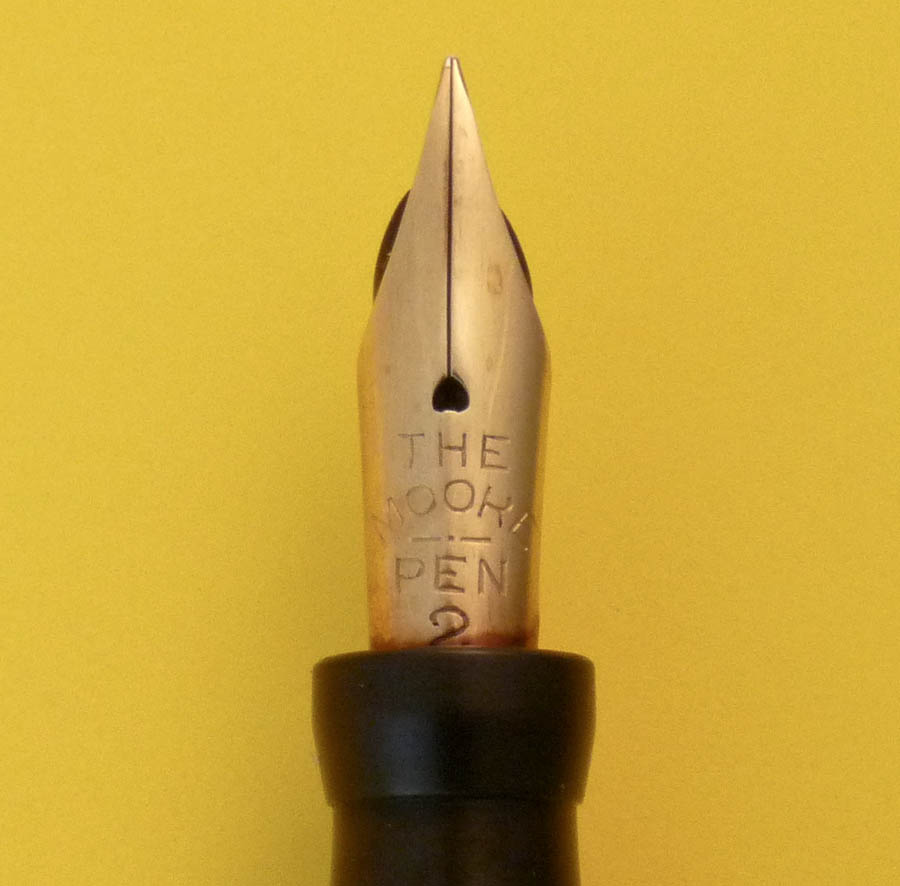
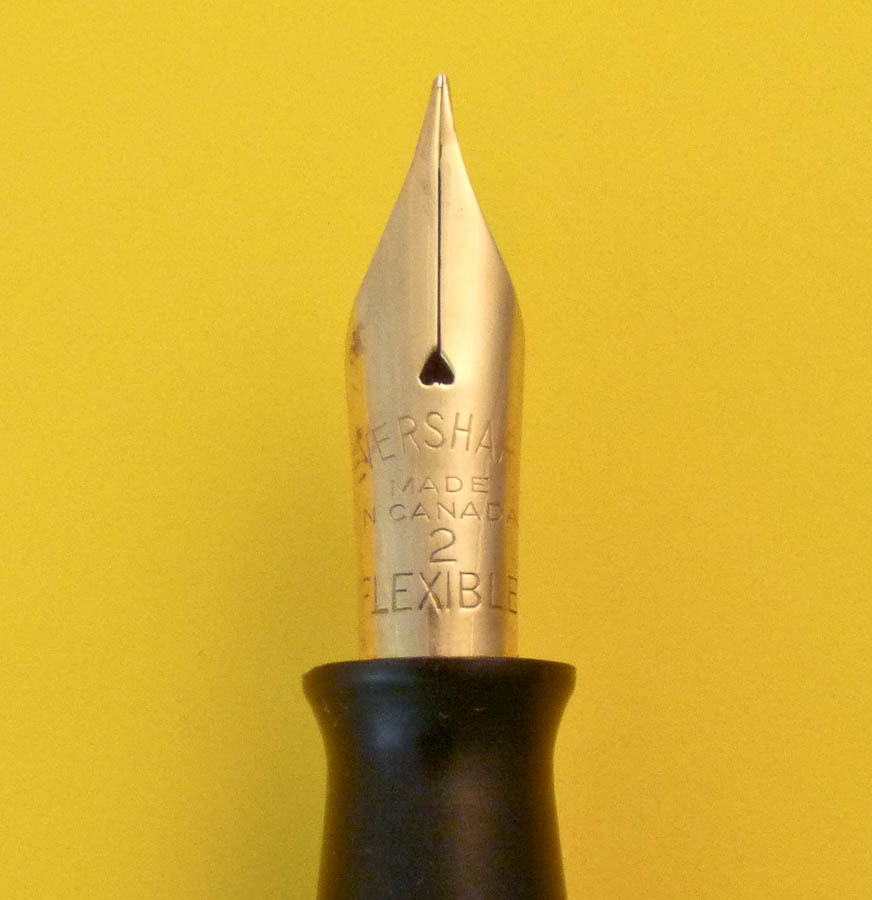
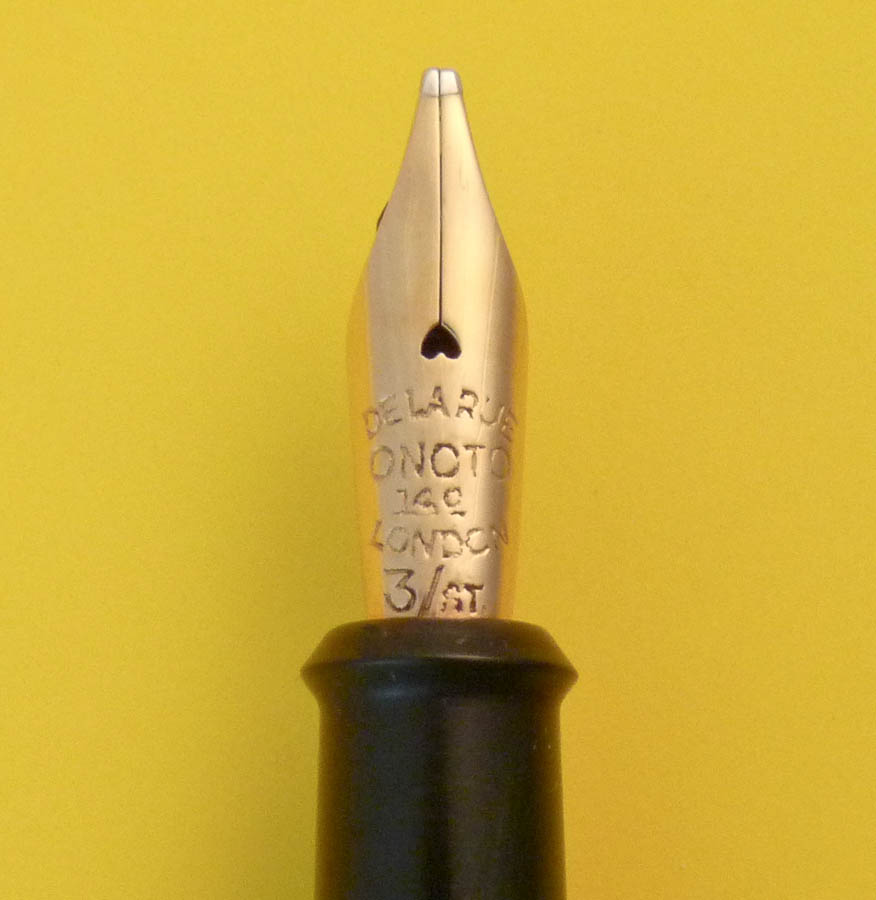
Many people use terms like “full-flex” or “semi-flex” to describe a nib’s ability to create the mentioned line variation. There’s no standardized system to measure this and unless the nib is marked this kind of label is based on trial and experience. Luckily, three of the pictured nibs are marked so we know they are officially flexible. The first two are the rather rare beast known as the Sheaffer Snorkel flexisaurus. OK, I made that last word up but you get the idea. You could obtain a wide number of different points on Snorks (16 were listed but when you consider that there were 5 different nibs designs you can imagine the variety) and a number were flexible. Determining if you have such a nib is easy and 100% foolproof if the lightly etched nib codes (in use to 1958, after that you’re out of luck) are still visible. Often these have been polished off by the friction from repeated wiping. In the pictures you can these codes and the meaning is listed in the caption.

The Eversharp nib seen is stamped “flexible” leaving nary a doubt about what it was born as. Rounding these out is a Moore nib that through use can be determined as flexible and an Onoto with a stub nib and the moves to make it at least a semi-flex.

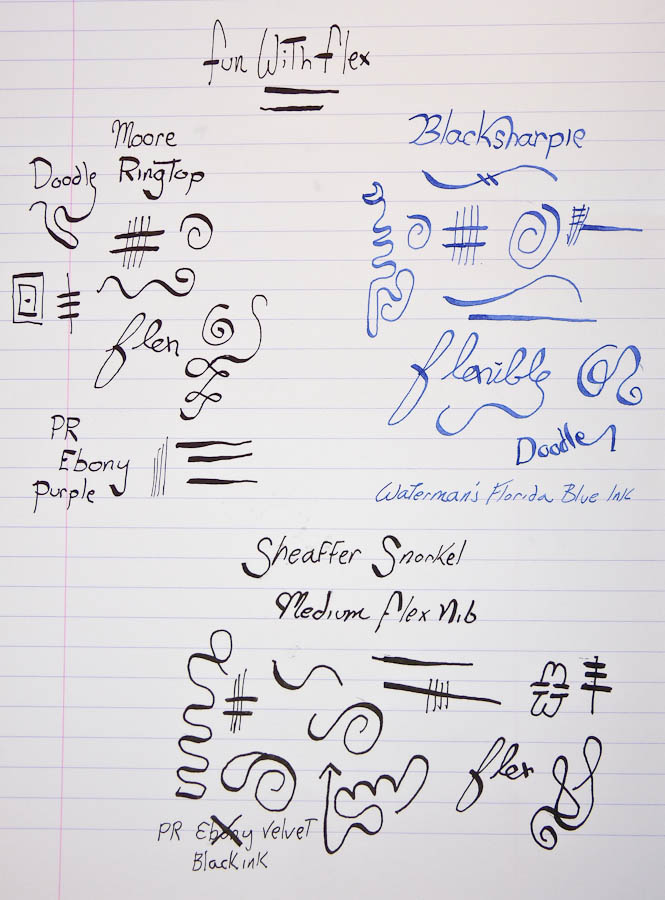
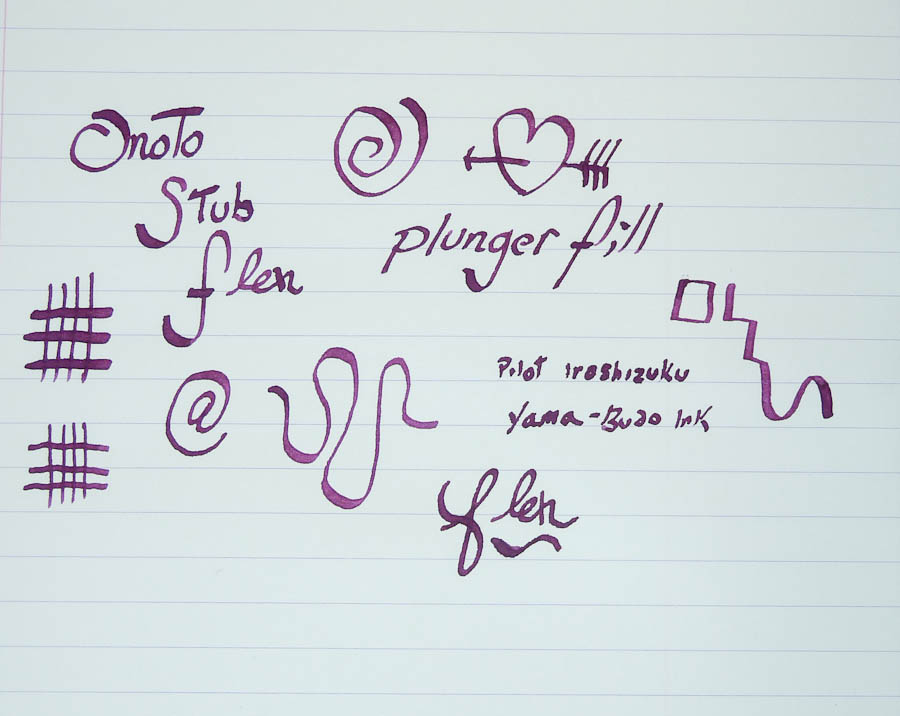
Now that you’ve seen the nibs you might want to see them in action. Well, too bad! I’ve got zero skill in calligraphy and my hand writing looks like I’m three sheets to the wind. OK, I did do something in the way of a demonstration which is that I doodled and recorded it. So below is my first (and maybe last) attempt at being my own A.V. club and I hope you enjoy it.

[media width=”[media width=”540″ link=” height=”350″ link=”http://www.youtube.com/watch?v=89Q_dHfeJew”]


If the video isn’t enough for you for an encore I’ve got some writing samples for you to examine followed by an image of what the whole pens (not just the nibs) look like.

Bound Up

Some mentions I heard of bookbinding recently brought back to mind something I wrote to illustrate a trick I learned years ago. It’s certainly not a secret and it may be taught now in bookbinding classes. Since this is a recycled post it has the benefit of quickly filling some space in my too little updated blog.

What’s great about a sewn hardcover binding is that they can lay flat since since the spine of the book case and the binding edge of the block do not adhere to each other. When you open a book like this there’s a gap so the book block can bend flexibly. In a perfect bound book you find that the spine is glued directly onto the block which means there’s a lot of resistance to it laying flat.

Two commercial binding systems (Otabind and RepKover) try to combine the ability of a hardcover book to open and stay flat with the cost benefits of softcover binding. What I did by hand is basically the principle they use.

A couple important notes: use high quality binding glue that is flexible. White glue is great but not ideal for binding. I used a cold set glue and not a hot melt which is kinda brittle. I used a nice thick, strong textured paper stock for the cover since the hinge has to be able to hold up to being creased and bent a lot. Speaking of creases a nice scoring knife is a handy thing to use here. My old instructor had ones made out of bone he swore by. Use a good quality fabric for attaching to the spine which is also known as mull or super cloth (no, it can’t leap tall buildings) so the glue can penetrate it properly. Last, you’ve got to have a book press or some kind of vise apparatus to get a good binding.

The theory is simple behind this: We’re going to glue a wide strip of cloth to the book block’s binding edge and then glue the edges of that cloth to the inside of the cover. We will leave an area extending out from that binding edge unglued.

1. Make a book block. I won’t go into details of this since it’s standard stuff. You lightly roughen up the binding edge, if I remember. Make sure you get good glue penetration. Let the block set and dry in the press.

2. Cut the cover and score the hinges so the spine fits snugly over the block.

3. Cut the super so it’s extends 2 cm or so wider than the block on both sides.

4. Put a thin layer of glue on the binding edge of the block and center the super onto that. Use a roller or something to really get the glue to penetrate. Let it dry. It may have been that this step was done when gluing the binding edge in step one above while that glue was wet. Memory fails me.

5. The block is inserted into the cover.

6. You put a thin layer of glue the outside of the super sticking out about half of its width and attach it to the inside of the cover. Wax paper or something might come in handy as an insert since some glue will ooze out. Be careful of the ooze!

7. When it’s dry that’s about it.

The books I did are from 1993 and still are holding up. Disclaimer: I’m not an expert at bookbinding nor do I know if this technique is a good one for you. Also, these books were trimmed further *after* being bound so they got a nice clean edge and any excess glue or the like was removed.

Here's the old book. I'm not trying to be pompous with the title. The publication I worked on in College was called "Generation Magazine". For this book I went back and found old poetry and fiction I liked from it. This was a typography class project, actually.
You can see the super cloth attached to the inside of the cover here.
This shows how it works when you open the cover.
Another view.
Another view.
It lies pretty flat.